Saturday, 23 April 2016

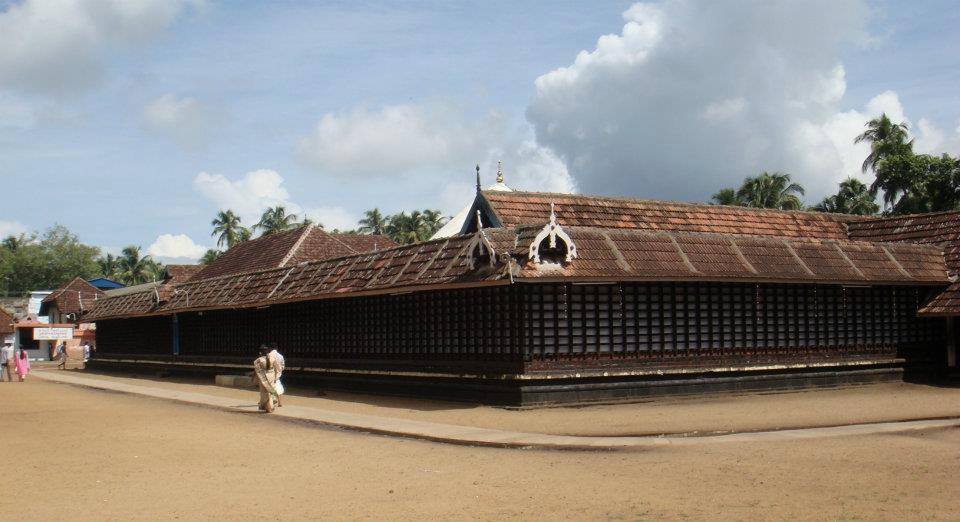
Historical Koodalmanikyam Temple in Thrissur district, Kerala


Historical Koodalmanikyam Temple or Kudal Manikkam Temple / Koodalmanikkam Temple is a Hindu temple which is situated in Irinjalakuda, Trissur district, Kerala state, India. Koodalmanikyam Temple is the temple in India dedicated to the worship of Bharata, apart from Amanakara in Palai- Thodupuzha route, the third brother of Rama. The temple is one of four in Kerala state that form a set called "Nalambalam", each temple dedicated to one of the four brothers in Ramayana: Rama, Bharata, Lakshmana and Shatrughna.


Koodalmanickyam is the Malayalam translation of the Sanskrit word Sangameswara.   There is, however, another talk about the name.   One day the idol was found to give out uncommonly bright  from its forehead.    Unable to identify the source of the brightness, some brought a Quartz (Manikyam) in the possession of Raja of Kayamkulam for comparison.  As they were comparing the brightness of the two, it is said the stone brought from Kayamkulam mysteriously slipped from the hand and merged with the one on the idol.The merging of two manikyamsled to the name ‘Koodalmanikyam’.   Similar brightness is reported to have appeared on the idol once again, much later in 1907.


It is perhaps the only temple in India with Bharatha as the presiding deity.The colourful eleven-day annual festival at the Koodalmanikyam temple is noted for the grand elephant pageantry. The festival falls in during April or May.


The temple is surrounded by four ponds. The largest of the four are Kuttan Kulam, located outside the compound on the eastern side, and Kulipini Theertham, located inside the compound. Kulipini Theertham is believed  to be sanctified by the sage Kulipini Maharshi, who held a great ritual sacrifice. Priests are allowed to take part in the ceremonies after cleansing themselves at the "Kuttan Kulam" outside the temple and then after taking a dip in "Kulipini Theertham" before entering sanctum sanctorum. The pond outside the compound located at the western side,  is called "Padinjare Kulam" and the pond outside the compound located at the southern side is called "Thekke Kulam".  


Getting there


  •      Nearest railway station: Irinjalakuda is about 10 km and Thrissur (Major Station of southern Railway) is about 22 km are the nearest railway stations.
  •      Nearest airport: Cochin International Airport is about 37 km via Salem Kanyakumari Highway.


Monday, 4 April 2016

Historical Triprayar Sree Rama Swami Temple, Kerala.


Historical Triprayar Temple, located in Thrissur district is one of the important temples dedicated to Lord Rama. Triprayar temple is located 22 kms south west of Thrissur in between Kodungalloor and Guruvayoor in the mid landmass of Chettuva. The temple is situated on the bank of river Theevra. Theevra river is also called Purayar. Hence this place got the name Thirupurayar (sacred river) and later became Triprayar. There is an interesting legend about the origin of this river. Lord Mahavishnu during his Vamana incarnation visited this place while going to Thrikkakkara and he found no water to wash his legs as the whole place was dry and desolate. Vamana took the water from his kamandalu (a small round vessel used by hindu sages to carry water) and poured the water to wash his legs, that source of water never went dry but kept on flowing as the Thiru Purayar or the Thriprayar (river of divine source) as it is called now. Purayar is also called Nandiyar.


Out of the four idols discovered by fisher men, the Sree Rama idol was the most important. Vakkayil Kaimal decided to install it in Triprayar. It is said that when the image of Rama was discovered and was about to be consecrated, it was divinely ordained that a peacock would appear and mark the exact time for installation. Kaimal and his men waited for a long time for the peacock but it didn't appeared. Apparently the Tanthri (chief priest) installed the idol when a devotee bearing peacock feathers appeared. Soon after the installation the peacock appeared in front of the Sreekovil. It is said that the priests and Kaimal regretted their decision later and to make up for this deficiency the sacrificial stone or the valiya balikkallu was installed at the spot marked by the peacock. Hence the balikkal is said to have the same importance as the deity itself. But this sacrificial stone showed a tendency to spin on its axis. It was Naranathu Bhranthan who fixed it at the spot by hammering a nail through it amidst the chanting of mantras. A mark of a nail can still be seen gives credence to this belief.

In order to prevent any decline in the power of the idol on account of the change in its location Naranathu Bhranthan also arranged to install two goddesses on either side of the deity-Sree Devi on the right and Bhumi Devi on the left. Another legend says that it was Vilwamangalm Swamiyar who is associated with several temples of Kerala, installed the Sree Devi and Bhumi Devi images and shut the Western doors of the temple. One day Swamiyar reached this temple and offered prayers to Lord Rama. During his pooja he noticed that Sree Devi and Bhumi Devi were entering the temple from the western gateway to offer prayers to the Lord. In order to set right the fault in location of the idol he requested them to stay inside the sreekovil. The Goddesses agreed and later Swamiyar installed Sree Devi and Bhumi Devi idols on either side of Rama. He then closed the western doors and left the temple. The western doors of the temple remain shut even today.


The image of Rama (Triprayar Thevar) resembles the Chaturbhuja Vishnu form with four arms, bearing a conch(Panchajanya), a disc (Sudarsana), a bow (Kodanda) and a garland respectively. It is believed that the deity worshipped here possesses some of the aspects of Shiva too. It was after killing the asura, Khara that Sri Rama got both the Shaiva and Vaishnava aspects. Thus Triprayar Thevar is also called Khara Samhara Moorthy. It is also believed that the portrayal of Rama with a garland held in the image's hand is also suggestive of aspects of Bhrahma and hence the deity is said to be a manifestation of the Trimoorthis. The image is adorned with necklaces and other fine jewelry. Images of Sreedevi and Bhudevi are on either side. There is an image of Dakshinamoorthy, in the sanctum facing the south. Dakshinamoorthy is commonly found in Shiva temples. There is also a lamp behind the image which is kept burning all the time. Because of these and also because of the fact that people got relief when troubled by evil spirits chathan-the deity is believed to have a Shiva aspect also.


Ganapathy prathishta is located at the south west corner of the sreekovil. Though there is no separate idol for Rama's best devotee Hanuman, it is believed that his presence is always there at the Namaskara mandapam of the temple. Devotees generally bow before the mandapa imagining the presence of Hanuman there before worshipping Sree Rama. The offering of flattened rice (avil) made from dried paddy is meant for Hanuman. Near the main temple towards the north there is a small shrine of Gosala Krishna. Outside the temple in the southern side of the courtyard there is an Ayyappa (Shastha) shrine. It is believed that the Shastha shrine was located originally at the site corresponding to the temple's sreekovil. With the arrival of Sree Rama, Ayyappa moved to the south in the present location. Now Thriprayar Thevar is the presiding deity of the Arattupuzha Pooram, one of the important festivals of central Kerala. Lord Ayyappa of this temple also participated in this pooram before the installation of Lord Rama. Except Triprayar Thevar, all other participants in this pooram are Sasthas and Bhagavathys of different temples. This also points to the conversion of Shastha shrine to Rama shrine.


Wednesday, 16 March 2016

Historical Vadakkunnathan Shiv Temple Thrissur.

Vadakkunnathan Shiv Temple Thrissur.


This is the first Shiva temple created by Lord Parasurama. Shiva here is more popularly known as Vadakkunnathan. Historical Vadakkunnathan Temple is situated at the heart of Thrissur city. The name Thrissur is derived from 'Thiru-Shiva-Peroor', which literally translates to "The city of the sacred Shiva".Thrissur was also known as Vrishabhadripuram, Vrishachala and Thenkailasam or Dakshina Kailasam(Kailasa of the south) in ancient days. Vadakkunnathan temple is surrounded by a massive stone wall enclosing an area of nearly 8-9 acres. Inside this fortification there are four gopurams indicating the four directions - North, South, East and West. Apart from these four gopurams there is a multi-shrined complex in the center with three principal shrines dedicated to Shiva or
Vadakkunnathan, Shankaranarayana and Rama. Lord Vettekkaran (Shiva in a hunter form) is also worshipped within the nalambalam enclosure. In the northern side there is a circular structure with the deity facing west. The figure of Shiva-Parvati faces east and is just behind Shiva,in the same shrine. The two-storied shrine of Sri Rama facing west is located in the south. Between these two srikovils stand a third one, circular and double storied in shape, dedicated to Sankaranarayana and facing west. There are mukhamandapams in front of all the three central shrines.


The idol of Shiva, which is not visible, is covered under lots of ghee, formed by the daily abhisheka (ablution) with ghee over the years. After abhisheka a portion of the ghee is returned to the devotees and they take it home as the ghee has miraculous powers to cure all diseases. A devotee
looking at the sanctum now sees a thirteen-foot high mount of ghee embellished with thirteen cascading crescents of gold and three serpent hoods at top. According to traditional belief, this represents the snow-clad Mount Kailas, the abode of Parvathy and Parameswara.


Outside the nalambalam, there are shrines for Lord Krishna, Vrishabha, Parasurama, Simhodara, Dharmasastha and Adi Sankaracharya. Adi Sankara is believed to have been born to the Shivaguru-Aryamba couple of Kalady in answer to their prayers before Vadakkunnathan, as amsavatara (incarnation) of the Lord. Legend has it that Shiva appeared to bothhusband and wife in their dreams, and offered them a choice: a mediocre son who would live a long life, or an extraordinary son who would not live long. Both Shivaguru and Aryamba chose the latter. The son was named Shankara, in honour ofShiva. Not only in the case of physical structures, but also in the matter of rituals, poojas and even in the order of movement of a worshipper from sanctum to sanctum, the temple maintains a uniqueness of its own. It is believed that you have to follow a certain order when moving between the temples. It is advisable to ask somebody inside this temple for this.


Thursday, 10 March 2016

Akamala Sastha Temple.

Akamala Sastha Temple, Thrissur.


This Temple has been recorded as the northern boundary of Peruvanam Gramam (the ancient temple - Principality) under the tutelage of the Maharajas of Cochin. This temple has been mentioned in the Survey Records of 18thCentury, maintained by the Madras Presidency of the British Empire.
In Course of time, the Temple got damaged by the ravages of time. A road and then a railway track were built through the temple land. As a result the temple land got divided. Gradually, the temple itself was reduced to a mere idol and a stone platform. 


This sorry state of affairs continued for decades. Gradually people around the area and the travellers along this route began to experience many evil omens. Following this, a few devotees came forward to conduct a “ Devaprasnam “and then renovate the Sastha Temple in accordance with the astrological dictums and scriptural injunctions.

**Om Namah Shivay**

The Ancient Mammiyoor Temple.

The Mammiyoor Temple.


The ancient Mammiyur Temple is situated at a walkable distance of 200 metres north west to the famous Guruvayoor Sree Krishna Temple. The main deity is Lord Shiva in the form of Uma Maheswara. Lord Vishnu is also given equal importance in a sanctum sanctorum near to that of Lord Shiva. This is the only Temple where Lord Shiva and Lord Vishnu are worshipped in equal status in poojas, rituals, thanthripooja, Rigveda dhara, murajapa, festival processions and in all respects. The upadevas are Sree Parvathy, Vigneswara, Subrahmanian, Ayyappa, Brahmmarakshassu, Bhagavathy, Naga and Rakshassu. This is a prominent Temple among the 108 Shivalayas consecrated and regulated by Lord Parasurama, the mythical founder of Kerala.


The legendary history extends to the consecration of the famous Sree Guruvayur Temple - It was the final phase of Dwaparayuga. The great Deluge has submerged Sree Krishna's abode Dwaraka and the Lord, as a playful child, was frolicking on a banyan leaf tossed about by the surging waters. Devaguru Brihaspathi and wind god Vayu stumble upon him where upon the Lord himself handed over to them the idol of the Supreme Lord that he has been worshipping at Dwaraka, with instructions to have it installed and consecrated at an appropriate spot on earth.


Guru and Vayu then descended on the banks of a sprawing lake Rudratheertha rendered holy by Lord Shiva who has been doing penance there for ages. Realizing the purpose of the visit Lord Shiva suggested the consecration there itself on the bank of Rudratheertha and obligingly moved over to a near by location on the other side of the Rudhra theertha.


The place where Guru and Vayu consecrated the idol of Lord Krishna became GURUVAYOOR and the site that Lord Shiva chose for himself and his consort Sree Parvathy became Mahimayur, mahima evolving out of the status bestowed on Lord Shiva for voluntarily relinquishing his initial abode to accommodate Lord Krishna. This in course of time got colloquialised as MAMMIYUR.


The devotees who visit Sree Guruvayoor Temple for darshan used to pay pranams to Sree Mammiyurappan by nodding towards North West direction at Bhagavathykettu in Temple. It is considered that any pilgrimage to Guruvayoor Temple is complete only after a visit to Mammiyur Temple also.