Saturday, 23 April 2016

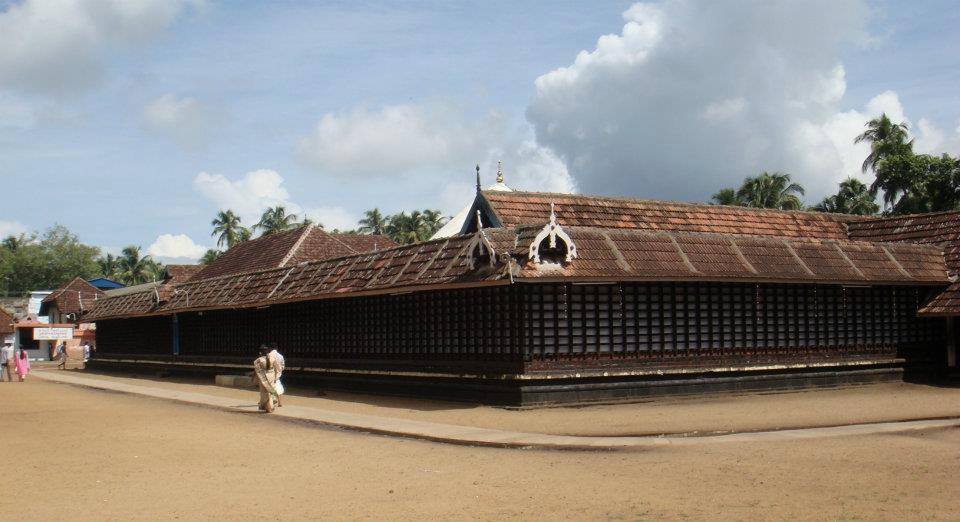
Historical Koodalmanikyam Temple in Thrissur district, Kerala


Historical Koodalmanikyam Temple or Kudal Manikkam Temple / Koodalmanikkam Temple is a Hindu temple which is situated in Irinjalakuda, Trissur district, Kerala state, India. Koodalmanikyam Temple is the temple in India dedicated to the worship of Bharata, apart from Amanakara in Palai- Thodupuzha route, the third brother of Rama. The temple is one of four in Kerala state that form a set called "Nalambalam", each temple dedicated to one of the four brothers in Ramayana: Rama, Bharata, Lakshmana and Shatrughna.


Koodalmanickyam is the Malayalam translation of the Sanskrit word Sangameswara.   There is, however, another talk about the name.   One day the idol was found to give out uncommonly bright  from its forehead.    Unable to identify the source of the brightness, some brought a Quartz (Manikyam) in the possession of Raja of Kayamkulam for comparison.  As they were comparing the brightness of the two, it is said the stone brought from Kayamkulam mysteriously slipped from the hand and merged with the one on the idol.The merging of two manikyamsled to the name ‘Koodalmanikyam’.   Similar brightness is reported to have appeared on the idol once again, much later in 1907.


It is perhaps the only temple in India with Bharatha as the presiding deity.The colourful eleven-day annual festival at the Koodalmanikyam temple is noted for the grand elephant pageantry. The festival falls in during April or May.


The temple is surrounded by four ponds. The largest of the four are Kuttan Kulam, located outside the compound on the eastern side, and Kulipini Theertham, located inside the compound. Kulipini Theertham is believed  to be sanctified by the sage Kulipini Maharshi, who held a great ritual sacrifice. Priests are allowed to take part in the ceremonies after cleansing themselves at the "Kuttan Kulam" outside the temple and then after taking a dip in "Kulipini Theertham" before entering sanctum sanctorum. The pond outside the compound located at the western side,  is called "Padinjare Kulam" and the pond outside the compound located at the southern side is called "Thekke Kulam".  


Getting there


  •      Nearest railway station: Irinjalakuda is about 10 km and Thrissur (Major Station of southern Railway) is about 22 km are the nearest railway stations.
  •      Nearest airport: Cochin International Airport is about 37 km via Salem Kanyakumari Highway.


Wednesday, 6 April 2016

Story of Murudeshwar Temple in Karnataka


Murdeshwara is a town in Bhatkal Taluk of Uttara Kannada district in the state of Karnataka, India. Murudeshwara"' is another name of the Hindu god Shiva. Historical Murudeshwara Temple - Famous for the world's second-tallest Shiva statue.

History.


Once Ravana (King of Lanka) prayed and worshiped Lord Shiva to attain immortality by getting the ‘Atma Linga’ Pleased by his prayers, Lord Shiva appeared before him and asked him what he wanted. By this time Narada had asked Lord Vishnu to change Ravana’s mind. As a result of this plot, Ravana asks for Goddess Parvati instead of atma linga and lord Shiva offers Parvati to Ravana. On the way back to Lanka Narada showing the Kali avatar of Parvati tells Ravana that Shiva has not given him the real Parvathi and that the real Parvathi was in Pathala. Ravana frees Kali and went to Pathala and married Mandodari assuming her to be real Parvati. He then returns to Lanka, where his mother asks him for the Linga. Ravana then realizes that he was tricked started worshiping lord Shiva with much more strong devotion. Lord Shiva appears again and this time, Ravana requests theAtmaLinga as his boon. Lord Shiva agrees to give him the boon with the condition that it should never be placed on the ground. If the AtmaLinga was ever placed on the ground, all the powers would return to Lord Shiva again. Having obtained his boon, Ravana started back on his journey to Lanka.


Sage Narada, who came to know of this incident realised that with the AtmaLinga Ravana may obtain immortality and create havoc on earth. He approached the Lord Ganesh and requested him to prevent the AtmaLinga from reaching Lanka. Lord Ganesh knew that Ravana was a very devoted person who used to perform prayer ritual in the evening every day without fail. He decided to make use of this fact and came up with a plan to take possession of the AtmaLinga from Ravana.

As Ravana was nearing Gokarna, Lord Vishnu blotted out the sun to give the appearance of dusk. Ravana now had to perform his evening rituals but was worried because with the AtmaLinga in his hands, he would not be able to do his rituals. At this time, Lord Ganesh in the disguise of a Brahmin boy accosted him. Ravana requested him to hold the AtmaLinga until he performed his rituals, and asked him not to place it on the ground. Ganesh struck a deal with him saying that he would call Ravana thrice, and if Ravana did not return within that time, he would place the AtmaLinga on the ground.


As predicted, before Ravana could return after completing his rituals, Ganesh had already placed the AtmaLinga on the ground. Vishnu then removed his illusion and it was daylight again. Ravana, realising that he had been tricked, tried to uproot and destroy it; Due to the force exerted by Ravana, some pieces were scattered. One such piece from the head of the linga is said to have fallen in present day Surathkal .The famous Sadashiva temple is said to be built around that piece of linga. Then he decided to destroy the covering of the AtmaLinga, and threw the case covering it to a place called Sajjeshwara, 23 miles away. Then he threw the lid of the case to a placed called Guneshwara (now Gunavanthe) and Dhareshwara, 10–12 miles away. Finally, he threw the cloth covering the AtmaLinga to a placed called Mrideshwara in Kanduka-Giri (Kanduka Hill). Mrideshwara has been renamed to Murudeshwara.


Historical Thirumandhamkunnu Bhagavthy temple, Angadippuram Kerala.


Historical Thirumandhamkunnu Bhagavthy temple is one of the ancient and famous Mahakshethras of Kerala. This shrine which is the foremost in the Bhadrakali temples. This Temple is located at Angadippuram in Malappuram district. The temple stands prominently on the top of a hillock with an attractive look and majestic apperearance.The scenic beauty, the bliss of solitude and mental pease imparted by this place will ever be in the mind of a devotee who had at least been once to this place.

The King Mandhatha of surya dynasty ruled the country for long period. He then gave away the kingdom to his successors and chose to meditate on lord Siva and attain the lord's feets at the end. Siva was pleased with his penance appeared before the king and offered him any boon. The king prayed to the lord for an idol to worship till his death. Siva gave him the most holly Siva linga at Kailas, which was too dear to him and which used to be worshiped by Parvathy and the disappeared.Carrying the Siva linga on head mandhatha started his downward journey from Kailas and reached the hill now known as Thirumandhamkunnu.A spring with crystal clear water flowed along the northern slop of the hill. Many beautiful birds chirped in the jungle. Wild animals like lion, tiger, and elephant roamed about in the wilderness in full harmony forgetting their traditional enimity. Different kinds of trees and plants grew in the region and gave out sweet smell in to the atmosphere. The surrounding attracted the king. Feelings of idol on his head heavy he placed it on the ground at immediately the linga got stuck in to the earth.

Lord Siva had gifted the linga to the king when his consort parvathy was away for her bath. When parvathy turned up for worship the Siva linga was not there. She got upset on enquiry she know that it was presented to the king mandhatha, by her husband. Being too much attached to it she wanted the linga back. Siva tolled her that he had no objection in her trying to get it back.Parvathy now asked bhadrakali and a host of bhoothas to rush up and get back the Siva lingam from the king. With the army of Bhoothas Kali reached the northern slope of Thirumandha hill. The brightness emitted by the Linga installed by Mandnatha was so great that it dazzled the eyes of kali and bhoothas and they were unable to move up the hills. So they started throwing up the weapons from the foot of the hill. The ascetic attending on mandhatha were unarmed but tried to defend themselves with whatever things they had. These being insufficient to protect them they plucked Attanga nuts from their creeper plants, which were available in plenty and threw them at the enemy. Because of the power of Lord Siva and the mandra power of Mandhatha the nuts got changed in to arrows instantly. Kali and her Bhoothas could not resist them the fight lasted for 15 days.
The age old custom of "ATTANGA YERU" on first of Thulam (The Malayalam month) on the new moon day of the same month in the forenoon before pantheerady pooja refers to the legendary fight between mandhatha and kali.


Expecting defeat Mahamaya took her viswaroopa. She had an elephant in an ear and a lion in the other as earring. Seeing this form the ascetics fell down senseless. When mahamaya in this form reached the hilltop mandhatha was also helpless. He embraced the sivalinga kali tried to capture it by force. In this struggle that followed the linga got split into two. In the "Jyothis" that arose from it "THRIMOORTHIS" (Brahma, Vishnu and Siva) and Parvathy appeared on the spot.
Parvathy told Mandhatha this idol was very dear to me. Still I do not want to take it away from you against the wishes of my husband. Separation from it is also difficult for me. So I will enter that linga and remain here forever. My daughter kali is not different from me. Actually she came here first. Let her also be installed near me facing north and have all poojas and festival performed. So same parvathy disappeared into the idol. This spot is the "SREEMOOLASTHANAM". The sivalinga here is still split condition .Its position is below the "peedam" and "Prabhamandalam" and can be seen only during the abhisheka before the ushapooja and "Malarnivedia" to the deity.


As ordered by Parvathy, Bhagavathy with Sapthamathrukkal, Veerabhadran and Ganapaty were installed facing north. This is called "Mathrusala". Pooram, Pattu and all such festivals intended for this goddess.

When Sree Parvathy appears infant Ganapathy was also with her. This infant ganapathy also been installed at sreemoolasthanam.Sree Parvathy appeared facing west. The installations of Sivalinga at Sreemoolasthanam were facing east. It was thus for necessary to have two darshan openings one to the east and the other to west. The family descendants of "Valluva Konathiri" do not generally open the one on the west except for darshan. On either side of the doorway here are two openings through which other worshippers can have darshan of the diety. But in recent past the restrictions has been modified. After each pooja the door is keept open for some time for darshan of the deity by devotees.
Mandhatha spent many years at thirumandhamkunnu in meditation and thapusu. At last he knew it was time for him to leave this world. He was thinking of entrusting the temple to someone for perfect upkeep and maintenance when two Brahmins came there. Mandhatha told them his desire gave them a Grandha containing instructions on the performance of poojas and entrusted the shrine to them. He then retired to the jungle near by now known as "KUKSHIPPARAKKAD" and freed himself from this world of mortals by his yogic powers. Bhakthas who go round this jungle paying homage pick out a leaf from the growing plants and keep it in hair with at most reverence. This area is still a protected jungle. In the Devaprashna conducted in 1959 it was observed that an idol of mandhatha should be installed here and poojas, performed. The temple priests before pooja every Malayalam month. The annual pooja on Chithra in midhunam on Mandhatha is on special significance.


Two Brahmins entrusted with the upkeep of temple, one cleared the jungle around the idol and hence came to be known as "KATTILLAMUTTAM" .The other prepared pavilion for prathishta and came to be known as "PANTHALAKODE". The thanthri of thirumandhamkunnu temple is still a descendent from either of these families. The nair karyasthan who was with them was given the title "chathathumarar" and made the blower of holy conch in the temple. The Namboodiri's informed the news to Vadakkara swaroopam raja that was subordinate chieftain of valluvanadu raja holding the title mannarmala raja. He immediately rushed to the spot (Seeing the over-lord of the hill the goddess got up and paid homage to him. This humility of Devi-the sustainer of three worlds-made the raja blink in shame and) he prayed to the goddess to see him as a son. He then presented an elephant to the goddess and worshipped her from its rear, standing in its shadow. His descendants also followed the same practice. Even now direct darshan of thirumandhamkunnu Bhagavathy is not permissible to mannarmala raja.
The first Vallavaraja who took over the control of the temple entrusted its upkeep and maintenance to the local feudal lords "ETTUVEETIL ACHANS" and made them trusty. Erukalikara nair was made kavudaya nair. Sreemoolasthanam does not have a roof, which is an evidence of it having been a kavu.

The painting on the walls of the mathrusala throws light to this legend. These paintings which are in lying with the wall painting at suchindram, Pundarikkapuram,vaikom and Guruvayoor were executed in the year 1944.


Monday, 4 April 2016

Historical Triprayar Sree Rama Swami Temple, Kerala.


Historical Triprayar Temple, located in Thrissur district is one of the important temples dedicated to Lord Rama. Triprayar temple is located 22 kms south west of Thrissur in between Kodungalloor and Guruvayoor in the mid landmass of Chettuva. The temple is situated on the bank of river Theevra. Theevra river is also called Purayar. Hence this place got the name Thirupurayar (sacred river) and later became Triprayar. There is an interesting legend about the origin of this river. Lord Mahavishnu during his Vamana incarnation visited this place while going to Thrikkakkara and he found no water to wash his legs as the whole place was dry and desolate. Vamana took the water from his kamandalu (a small round vessel used by hindu sages to carry water) and poured the water to wash his legs, that source of water never went dry but kept on flowing as the Thiru Purayar or the Thriprayar (river of divine source) as it is called now. Purayar is also called Nandiyar.


Out of the four idols discovered by fisher men, the Sree Rama idol was the most important. Vakkayil Kaimal decided to install it in Triprayar. It is said that when the image of Rama was discovered and was about to be consecrated, it was divinely ordained that a peacock would appear and mark the exact time for installation. Kaimal and his men waited for a long time for the peacock but it didn't appeared. Apparently the Tanthri (chief priest) installed the idol when a devotee bearing peacock feathers appeared. Soon after the installation the peacock appeared in front of the Sreekovil. It is said that the priests and Kaimal regretted their decision later and to make up for this deficiency the sacrificial stone or the valiya balikkallu was installed at the spot marked by the peacock. Hence the balikkal is said to have the same importance as the deity itself. But this sacrificial stone showed a tendency to spin on its axis. It was Naranathu Bhranthan who fixed it at the spot by hammering a nail through it amidst the chanting of mantras. A mark of a nail can still be seen gives credence to this belief.

In order to prevent any decline in the power of the idol on account of the change in its location Naranathu Bhranthan also arranged to install two goddesses on either side of the deity-Sree Devi on the right and Bhumi Devi on the left. Another legend says that it was Vilwamangalm Swamiyar who is associated with several temples of Kerala, installed the Sree Devi and Bhumi Devi images and shut the Western doors of the temple. One day Swamiyar reached this temple and offered prayers to Lord Rama. During his pooja he noticed that Sree Devi and Bhumi Devi were entering the temple from the western gateway to offer prayers to the Lord. In order to set right the fault in location of the idol he requested them to stay inside the sreekovil. The Goddesses agreed and later Swamiyar installed Sree Devi and Bhumi Devi idols on either side of Rama. He then closed the western doors and left the temple. The western doors of the temple remain shut even today.


The image of Rama (Triprayar Thevar) resembles the Chaturbhuja Vishnu form with four arms, bearing a conch(Panchajanya), a disc (Sudarsana), a bow (Kodanda) and a garland respectively. It is believed that the deity worshipped here possesses some of the aspects of Shiva too. It was after killing the asura, Khara that Sri Rama got both the Shaiva and Vaishnava aspects. Thus Triprayar Thevar is also called Khara Samhara Moorthy. It is also believed that the portrayal of Rama with a garland held in the image's hand is also suggestive of aspects of Bhrahma and hence the deity is said to be a manifestation of the Trimoorthis. The image is adorned with necklaces and other fine jewelry. Images of Sreedevi and Bhudevi are on either side. There is an image of Dakshinamoorthy, in the sanctum facing the south. Dakshinamoorthy is commonly found in Shiva temples. There is also a lamp behind the image which is kept burning all the time. Because of these and also because of the fact that people got relief when troubled by evil spirits chathan-the deity is believed to have a Shiva aspect also.


Ganapathy prathishta is located at the south west corner of the sreekovil. Though there is no separate idol for Rama's best devotee Hanuman, it is believed that his presence is always there at the Namaskara mandapam of the temple. Devotees generally bow before the mandapa imagining the presence of Hanuman there before worshipping Sree Rama. The offering of flattened rice (avil) made from dried paddy is meant for Hanuman. Near the main temple towards the north there is a small shrine of Gosala Krishna. Outside the temple in the southern side of the courtyard there is an Ayyappa (Shastha) shrine. It is believed that the Shastha shrine was located originally at the site corresponding to the temple's sreekovil. With the arrival of Sree Rama, Ayyappa moved to the south in the present location. Now Thriprayar Thevar is the presiding deity of the Arattupuzha Pooram, one of the important festivals of central Kerala. Lord Ayyappa of this temple also participated in this pooram before the installation of Lord Rama. Except Triprayar Thevar, all other participants in this pooram are Sasthas and Bhagavathys of different temples. This also points to the conversion of Shastha shrine to Rama shrine.


Sunday, 3 April 2016

Historical Meenakshi Amman Temple, Madurai.


Historical Meenakshi Amman Temple is the holy temple of hindus located in the city of Madurai in southern India. It is a spectacular yet massive temple of Lord Shiva and Goddess parvati.


That makes this temple different than the others is the fact that both God and Goddess are worshipped together. It is the life line of the country, especially southern India as Lord shiva is the highly worshiped god of the country. It has its foundation way back in the 2500 AD. According to the mythology, Lord shiva visited Madurai to marry Parvati and it has been the sacred abode of Goddess Parvarti since her birth. The wonderful architecture of the place is amongst the seven wonders of the world and the construction is highly minute with great art piece incorporated the walls and pillars of the temple.

Temple History:
According to legend, the sacred Suyambulingam discovered by the king of Gods indira at Kadambavanam, was later enshrined by him in Madurai. The fact that the Lord is seen on the vehicle of Indira in this temple is said to be proof for this.
Many historical evidences of the temple have been found dating back from early A.D. The temple was almost completely destroyed in the year 1310 following the invasion of the Islamic conqueror Malikkapur.As kings who were followers of Islam were noted for their intolerance towards other religions, the invaders destroyed most of the ancient sculptures of the temple.

Thirugnanasambandar the Hindu Saint has mentioned the temple in his songs which go back to early 7th century. The Lord has been described as Alavai Iraivan in his songs.The temple was restored to its pristine glory in the late 14th century when the Hindu Kings came back to power in Madurai.This can also be termed as a new beginning of a new era in the history of the temple, when it was almost rebuilt. The King Thirumalai Naicker played an important role in the construction of the new form of the temple according to records.
The Madurai Meenakshi Amman Temple is now under the administration of the HR and CE department of Tamil Nadu.

Thursday, 31 March 2016

Historical Sri Chottanikkara Bhagavathy Temple in Ernakulam.

Historical Chottanikkara Temple.


Is located near Ernakulam in the southern Indian state of Kerala.The Divine Mother known as Rajarajeswari (Adiparasakthi) is worshipped here in three forms Saraswathy in the morning, Lakshmi at noon and Durga in the evening. There is an Idol of Mahavishnu on the same pedestal and so the Deity is called Ammenarayana, Devinarayana, Lakshminarayana and Bhadrenarayana also. Along with Lakshmi & Narayana there are idols of Brahma, Siva, Ganapathi (Ganesh), Subramanya and Sastha on the same pedestal.


Apart from the main deity, the temple complex consists of Kizhukkavu Bhagavathy temple, temples for Sastha, Siva, Ganapathi, Nagas and other Upa-Devas. The pleasant atmosphere in the temple give mental peace and harmony to devotees. "MAKOM Thozhal" (worship on the Makom day) is the most important festival of the temple which is celebrated in the month of Kumbham. (Feb / March) It is believed that Bhagavathy in her full attire gave darsan to Vilwamangalam Swamiyar on the Makom day and appears on the same day every year for giving darsan to the devotees in her special appearance. The Bhadrakaali at Kizhukkavu is believed to exorcise evil spirit from devotees, after conducting bhajanam.


The History of shree Chottanikkara Temple.


The temple of Chottanikkara is a living legend shrowned in magnificent mythology and awe-inspiring truth. Its historical appeal and traditional influence on generations of people is tremendous. Legends say that the presence of Divinity here was worshipped by BHOGACHARYA. The deity which is swayambhoo in latrite called Rudraksha Sila was worshipped by divine souls like Adisankaracharya, Vilwamangalam Swamiyar, Kakkasseri Bhattathiri and Chemmangattu Bhattathiri. It is the cynosure of thousands of devotees swarming from all over the world on all auspicious and festive occations.The golden hued Idol bedecked with flowers, garlands, jewels and bathed in myrid of light shine splendidly.

It is a picturesque image bewitching everybodyand embodiment of peace dispelling fears from devotees who worship Her. The temple is situated in hilly region surrounded on all sides by undulating beauty, rich with its green turf, golden farms and provides deep spritiual solace to the entire devotees.
This is one of the most celebrated Hindu shrines of Kerala. Thousands of pilgrims and devotees of the Goddess visit here and make their reverential offerings to redeem them of their afflictions. A visit to the temple brings relief to them from the overburdening anguish and agonies of material life.

The sacred doors of the sanctum sanctorum open in the wee hours of the day, at 4.00 a.m. The blowing of the conch and playing of the temple musical instruments lend an enchanting ritualistic rhythm and peace to those who seek a sure answer to the patient prayers. Sree Mookambika Saraswathy is also believed as present in the temple in the morning.That is why Mookambika Temple at kollur opens only after the Goddess Saraswathy returns to there late in the morning.


The Kizhukkavu Temple.
On the eastern side of the temple pond stands the Kizhukkavu temple.The idol facing westward is belived to be installed by Villwamangalam Swamiyaar. After the Athazha pooja (main pooja in the evening), the chief priest of the principal deity comes to Kizhukkavu to perform the famous and great pooja "ValiyaGuruthy" (great Sacrifice). The Guruthy is prepared in 12 cauldrons (huge vessel) and is performed at about 8.45 p.m every night.

Those who witness the guruthy performance, which itself is awe inspiring and prolonged ceremony, finds it an experience which is indescribable. Being present here during Valiya guruthy on Fridays permanently cures women suffering from mental abnormalities like schizophrenia. An ancient 'Pala' tree standing on the northeastern side of the sanctum sanctorum is covered with long iron nails hammered on by haunted victims with their foreheads.


Historical Udupi Sri Krishna Temple in Karnataka.


Historical Udupi Sri Krishna Temple is a famous Hindu temple dedicated to god Krishna located in the town of Udupi in Karnataka, India.


The matha area resembles a living ashram, a holy place for daily devotion and living. Surrounding the Sri Krishna Matha are several temples, the most ancient being made of basic wood and stone of 1,500 years origin.


The Krishna Matha was founded by the Vaishnavite saint Shri Madhwacharya in the 13th century. He was the founder of the Dvaita school of Vedanta. It is believed that Madhwacharya found the idol of SriKrishna in a large ball of gopichanda.


History


Legend has it that once Kanakadasa, a pious worshiper and devotee of Lord Krishna, was not allowed entry into the temple. It didn't upset him; instead it made him pray with intense devotion. Lord Krishna was so pleased that the statue turned back to where Kanakadasa was praying, and the wall before Kanakadasa broke up to allow the disciple to gaze upon his heavenly from at the back of the mutt (monastery). Till today, devotees still worship Lord Krishna by praying through the same window that Kanakadasa was blessed with a view: It is known as Kanakanakhindi.


>

Tuesday, 29 March 2016

Historical Vaikom Sree Mahadeva Temple

Historical Vaikom Sree Mahadeva Temple.

Vaikom in Kottayam district of the southern state of India, Kerala, is one of the main pilgrim centres of the south. Famous for the Vaikkath Asthami celebrations in November/December, it is one of the few temples which is held in reverence by both Shaivaites and the Vaishnavaites. Vaikkom’s Shiva is fondly called Vaikkathappan. The Shiva Linga here is believed to be from the ‘Treta yuga’ and considered as one of the oldest temples in Kerala where pooja has not been broken since inception. 


This is one of the huge property and a place to visit for having the prasadaootu and this temple has all the ingredients for a shiva temple.

The ancient Sanskrit texts, Bhargava Purana & Sanalkumara Samhita mention this place as Vaiyaghra geham and Vaiyaghra puram.


As per legends Vyaghrapada Maharshi got Siva darsana here, so it was fittingly called Vyaghrapadapuram. Later, when Tamil spread, the word Vaiyaghra got transformed as Vaikom.


Today Vaikom is one of the most revered Shiva shrines in South India. The temple along with Ettumanoor Siva Temple, Kaduthuruthy Thaliyil Mahadeva Temple is considered a powerful trisome. The belief is that if a devotee worships at these three temples before 'Ucha pooja', all the wishes are fulfilled.                                                                                                                                                      


Thursday, 17 March 2016

Historical Parassinikadavu Muthappan temple Kannur.


Sree Muthappan is a Hindu deity worshipped commonly in Kannur district of north Kerala state, South India. Muthappan and Thiruvappan, are considered to be a manifestation of Shiva and Vishnu, and henceMuthappan. It is said that if you call Him with Bhakti, He hears your prayer.
Worship of Muthappan is unique, in that it does not follow the Sattvic (Brahminical) form of worship, as in other Hindu temples. The main mode of worship is not via idol worship, but via a ritual enactment of Muthappan, performed daily at the Parassinikadavu temple. Fish is used as an offering to Muthappan, and people of all castes, religions and nationalities are permitted to enter the temple and take part in the worship.


Muthappan is also the principal deity in the ritualistic Theyyam dance (Muthappan Theyyam) performed in the famous Parassinikkadavu temple. The ritual performers of Muthappan Theyyam belong to the tribal community of Kerala. It is unique because in Kerala both the upper-caste Brahmins, and the lower-caste tribals, both have a significant contribution to the major forms of worship.


The traditional story of Parassinikkadavu Muthappan


The Naduvazhi Ayyankara Illath Vazhunnavar (a Nambudiri Brahmin) was unhappy, as he had no child. His wife Padikutty Antharjanam was a devotee of Lord Shiva. She made a sacrifice to Shiva for children. One day in her dream she saw the Lord. The very next day, while she was returning after a bath from a near by river, she saw a pretty child lying on a flower bed. She took the child home and she and her husband brought Him up as their own son.The boy used to visit the jungle near their house (mana) for hunting with His bow and arrows. He would then take food to the poor and to the backward communities with Him. As these acts were against the Namboothiri way of life, His parents earnestly requested Him to stop this practice, but the boy turned a deaf ear to their warnings. Ayyankara Vazhunavar became very disappointed.
One day the boy revealed His divine form (Visvaroopam or Viswaroopa or Cosmic All-Pervading form) to His parents. They then realized that the boy was not an ordinary child but God. They prostrated themselves in front of Him and He blessed them.

He then started a journey from Ayyankara. The natural beauty of Kunnathoor detained Him. He was attracted by the toddy of palm trees.Chandan (an illiterate and uncivilized toddy tapper) knew that his toddy was being stolen from his palm trees, so he decided to guard his palm trees. While he was keeping guard at night, he caught an old man stealing toddy from his palms. He got very angry and tried to shoot the old man using his bow and arrows but fell unconscious before he could let loose even an arrow.


Chandan's wife came searching for her husband. She cried brokenheartedly when she found him unconscious at the base of the tree. She saw an old man at the top of the palm tree, and called out to Him as "MUTHAPPAN" ("Muthappan" means grandfather in the local Malayalam language). She earnestly prayed to the God to save her husband. Before long, Chandan regained consciousness.
She offered boiled grams, slices of coconut, burnt fish and toddy to the Muthappan (Even today in Sree Muthappan temples the devotees are offered boiled grams and slices of coconut). She sought a blessing from Him. Muthappan chose Kunnathoor as His residence at the request of Chandan. This is the famous Kunnathoor Padi.

After spending some years at Kunnathoor, Sree Muthappan decided to look for a more favorable residence so that He could achieve His objective of His avataram. He shot an arrow upward from Kunnathoor. The shaft reached Parassini where the famous Parassini Temple stands today. The arrow, when it was found, was glowing in the Theertha (sacred water) near the temple. The arrow was placed on the altar of the temple. Since then, Lord Sree Muthappan has been thought to reside at Parassinikkadavu.

Another story

As a boy, Muthappan was rebellious. He was a great hunter and would skin the animals that He killed and wear their skins as clothes. One day, He came across a coconut tree that was being tapped for toddy, the liquor fermented from coconut sap. He climbed the tree and emptied the jar that was holding the toddy. When the toddy tapper returned and saw Muthappan, he immediately challenged Him. Muthappan turned the man to stone for daring to address such a powerful God as Himself in such a manner. During performances of Muthappan Theyyam, the performer consumes the toddy liquor and passes it around to the spectators. In this act, Muthappan “breaks” the temple rules by allowing alcohol into temple grounds.


Sree Muthappan is always accompanied by a dog.

Dogs are considered sacred here and one can see dogs in large numbers in and around the temple.One can see two carved bronze dogs at the entrance of the temple that are believed to symbolize the bodyguards of the God. When the Prasad is ready it is first served to a dog that is always ready inside the temple complex.Local legends enhance the importance of dogs to Sree Muthappan, such as the story that follows:A few years ago, temple authorities decided to reduce the number of dogs inside the temple; so they took some dogs and puppies away. From that very day, the performer of the Sree Muthappan Theyyam was unable to perform; it is said that the spirit of Sree Muthappan enters the performer's body for the duration of the ceremony. But He probably refused to enter the Theyyam performer's body because the dogs had been removed. Realizing their mistake, the dogs were brought back to the temple by the temple authorities. From that day onwards, Theyyam performances returned to normal.